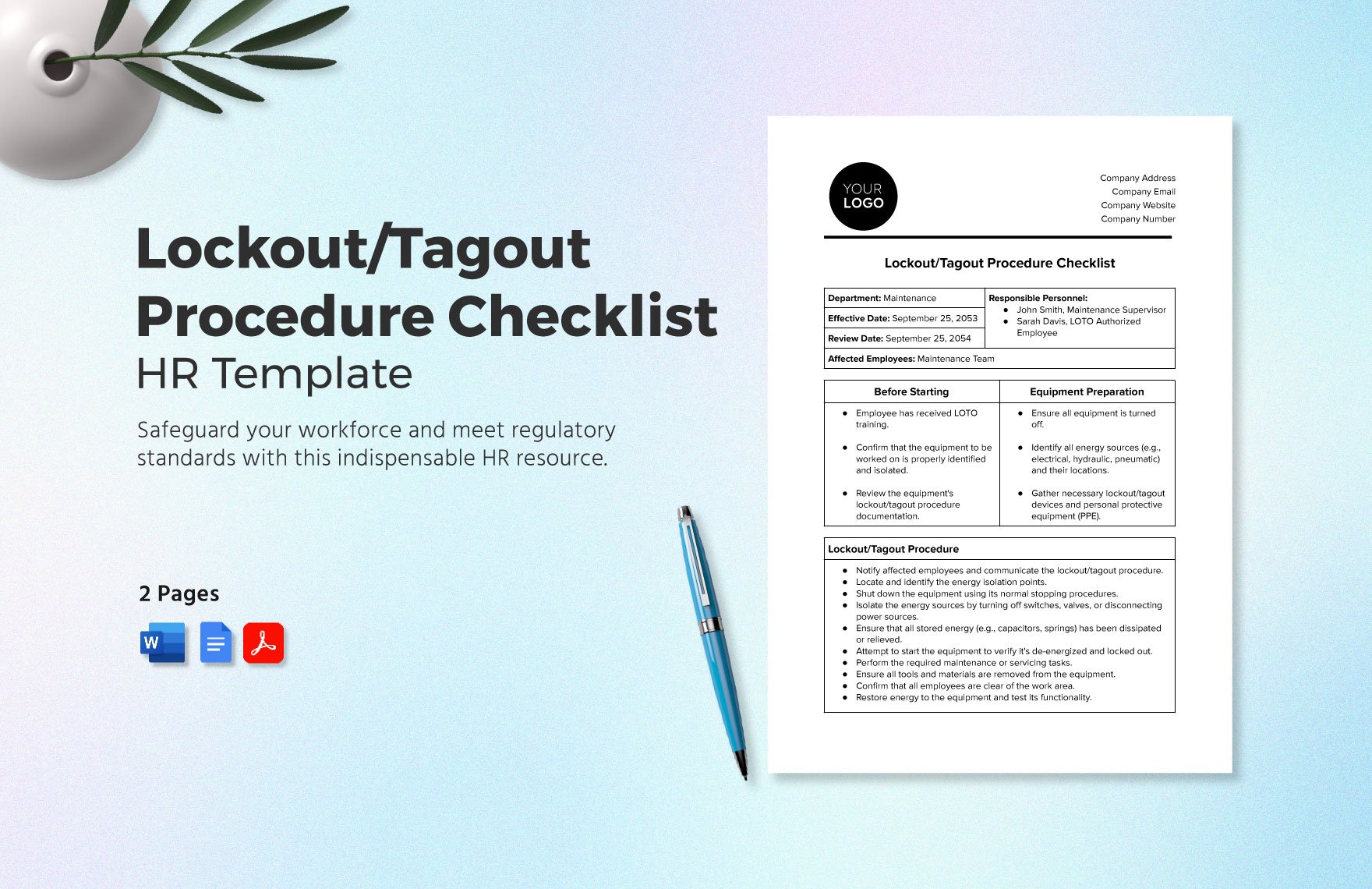
Equipment failure isn’t the biggest danger during maintenance—unexpected startup is. Workers servicing machinery face serious injury or death when energy sources reactivate tools without warning. That’s where a lockout tagout (LOTO) procedure becomes non-negotiable. A well-documented, accessible LOTO procedure protects teams, satisfies OSHA requirements, and prevents costly downtime. For organizations needing a fast, compliant solution, a free lockout tagout procedure template is invaluable—but only if it’s practical, customizable, and aligned with real-world operations.
This guide delivers exactly that: a clear path to implementing a reliable LOTO system using a free, adaptable template. More than just a download link, you’ll learn how to tailor it to your environment, avoid common compliance pitfalls, and ensure your team follows through every time.
Why a Free LOTO Procedure Template Saves Time and Lives
Creating a lockout tagout program from scratch takes weeks. You need to catalog energy sources, define control points, train personnel, and document every step. For small to mid-sized operations without dedicated safety staff, that’s a heavy lift.
A free LOTO procedure template cuts that effort in half. It provides:
- Standardized structure meeting OSHA 29 CFR 1910.147
- Ready-to-use sections for equipment-specific steps
- Built-in compliance checkpoints
- Clear roles for authorized and affected employees
The best templates aren’t just forms—they’re operational tools. They prompt you to identify hydraulic lines, electrical breakers, pneumatic valves, and stored energy sources before work begins. More importantly, they create accountability through sign-offs and verification steps.
- Example: A maintenance technician at a food processing plant uses a LOTO template to isolate a conveyor system. The template reminds them to:
- Shut down via control panel
- Isolate the motor disconnect
- Block moving parts
- Drain residual pressure from air lines
- Apply personal lock and tag
- Verify zero energy state
Without this sequence, a single missed step—like forgetting depressurized lines—can lead to injury.
What to Look for in a High-Quality Free Template
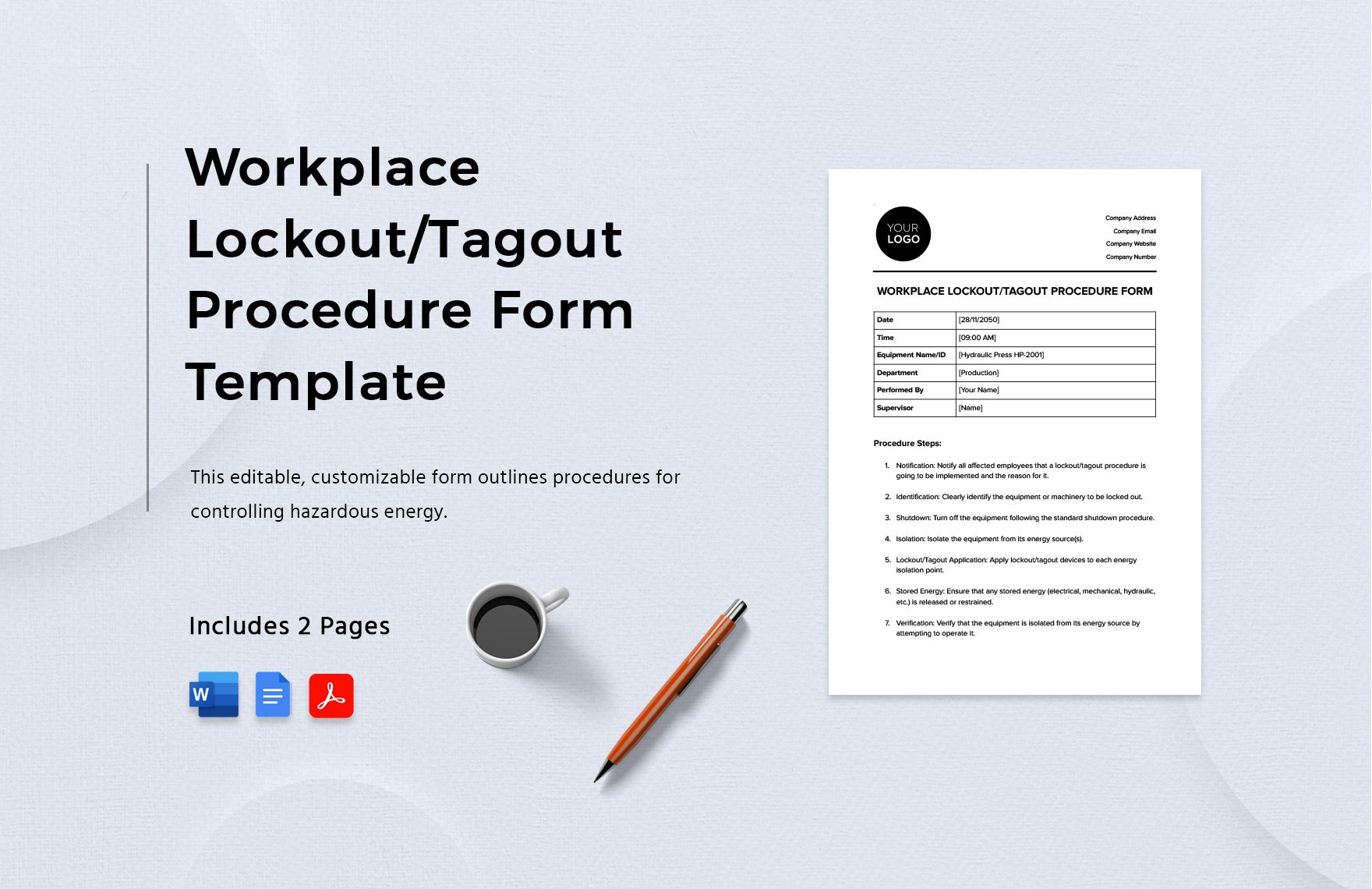
Not all free LOTO templates are created equal. Many are generic PDFs with blank lines and no guidance. A truly useful template includes:
#### ✔️ Equipment-Specific Sections One-size-fits-all doesn’t work for LOTO. Look for templates with sections you can duplicate and customize per machine—laser cutters, presses, mixers, etc.
#### ✔️ Step-by-Step Isolation Instructions Clear, sequential actions (e.g., “Turn off main disconnect at Panel B3”) beat vague prompts like “isolate energy source.”
#### ✔️ Verification Protocol The most critical part of LOTO is proving zero energy. A good template includes a verification checklist: “Test start button,” “Check for hydraulic pressure,” “Inspect for stored energy.”
#### ✔️ Authorized Employee Sign-Offs Track who applied locks, when, and why. Digital or handwritten signatures reinforce responsibility.
#### ✔️ Visual Aids and Diagrams Templates with space for photos or schematics help workers locate isolation points fast.
#### ❌ Red Flags in Free Templates - No distinction between authorized and affected employees - Missing verification steps - Pre-filled OSHA citations without context - Overly complex language
Stick to templates from reputable safety organizations or industry groups—they’re more likely to reflect real compliance needs.
How to Customize Your Free LOTO Template
A template is only a starting point. To make it work, you must adapt it. Here’s how:
#### 1. Audit Your Equipment Walk through each machine. Identify every energy source: electrical, mechanical, hydraulic, pneumatic, chemical, thermal. Document disconnects, valves, bleed ports.
#### 2. Assign Lockout Roles Define who is authorized (can lock out) vs. affected (operates but doesn’t service). Training records should be linked to the template.
#### 3. Write Machine-Specific Procedures Use the template to build individual LOTO plans. For a CNC lathe, this might include: - Power off via E-stop - Lock main breaker at subpanel - Engage spindle brake - Tag all control stations - Test for movement
#### 4. Add Visuals Attach photos showing exact lock placement or valve positions. A picture of a tagged disconnect reduces confusion during shift changes.
#### 5. Integrate with Training New hires should review completed templates during onboarding. Use real examples from your facility.
#### 6. Review Annually Update procedures after equipment changes, incidents, or audits. Outdated LOTO plans are as dangerous as having none.
Top 5 Sources for Free Lockout Tagout Templates
Not all free templates deliver real value. These five sources provide genuinely useful, customizable, and compliant options:
| Source | Format | Customization | OSHA-Aligned | Notes |
|---|---|---|---|---|
| OSHA.gov | PDF, Word | High | Yes | Official guide with sample procedures |
| National Safety Council (NSC) | Medium | Yes | Includes training references | |
| Creative Safety Supply | PDF, Excel | High | Yes | Machine-specific templates included |
| SafetySmart | Online, Print | Medium | Yes | Interactive fields for digital use |
| Mine Safety and Health Administration (MSHA) | Medium | Yes | Great for heavy equipment and mobile units |
Pro Tip: Download multiple templates and merge the best elements. For example, use OSHA’s structure but add Creative Safety Supply’s equipment checklist format.
Common Mistakes That Undermine LOTO Procedures
Even with a solid template, real-world execution often fails. Avoid these recurring errors:
#### ❌ Using Tags Without Locks Tagout alone is less secure than lockout. Tags can be ignored or removed. OSHA allows tagout only if lockout isn’t feasible—and requires additional protective measures.
#### ❌ Skipping Verification Workers assume power is off after locking a breaker. But stored energy in springs, capacitors, or elevated parts can still cause motion. Always test controls after isolation.
#### ❌ Incomplete Employee Training Affected employees must understand LOTO boundaries. They shouldn’t attempt to restart equipment just because a lock is in place.
#### ❌ One Procedure for Multiple Machines A generic “press LOTO” procedure fails when machines have different energy sources. Customize per model or serial number.
#### ❌ No Group Lockout Process During team maintenance, use a group lockout box. Each technician applies their own lock to a central hasp. The machine stays locked until the last person removes their lock.
Real-World Use Case: Implementing LOTO in a Small Manufacturing Shop
A 30-person fabrication shop had no formal LOTO program. After a near-miss involving a hydraulic shear, they adopted a free template from OSHA.gov.
- Steps they took:
- Downloaded and printed the template
- Assigned a safety lead to document 12 key machines
- Created photo-based LOTO cards for each
- Trained all maintenance staff
- Mounted laminated procedures near each machine
Within two months: - 100% compliance in audits - Zero lost-time incidents during maintenance - Faster turnaround on repairs due to clearer protocols
The template didn’t just check a compliance box—it changed behavior.
Integrating LOTO Into Your Safety Culture
A template is a tool, not a solution. Lasting safety comes from integration:
- Review procedures in safety meetings – Walk through a different machine each month.
- Post procedures visibly – Near control panels or in break rooms.
- Include in onboarding – New hires complete a LOTO drill before touching equipment.
- Audit randomly – Managers observe lockout execution quarterly.
When LOTO becomes routine—not paperwork—your team starts thinking like safety professionals.
Limitations of Free Templates (And How to Overcome Them)
Free templates have blind spots: - They don’t auto-update when regulations change - No built-in digital tracking - Lack integration with CMMS or EAM systems
Solutions: - Pair the template with a maintenance log - Upgrade to digital LOTO software for large facilities (e.g., ProMax, Sphera) - Schedule biannual compliance reviews
For most small to mid-sized operations, a well-maintained free template is more than sufficient—especially when paired with consistent training and enforcement.
Download and Act: Your Next Steps
- Don’t let compliance paralysis delay safety. Start now:
- Download a free LOTO template from OSHA or Creative Safety Supply
- Customize it for one high-risk machine
- Train your team on that procedure
- Expand to other equipment over the next 30 days
A single incident can cost hundreds of thousands in fines, downtime, and human suffering. A free template costs nothing—and could prevent it all.
Use it. Adapt it. Own it.
Frequently Asked Questions
Where can I get a free lockout tagout procedure template? Reputable sources include OSHA.gov, the National Safety Council, and safety suppliers like Creative Safety Supply.
Is a free LOTO template OSHA-compliant? It can be—once customized to your equipment and processes. OSHA doesn’t approve templates, but your program must meet 29 CFR 1910.147.
Do I need a separate procedure for each machine? Yes, if the energy control steps differ. Similar machines may share a procedure, but only if isolation methods are identical.
Can I use tagout instead of lockout? Only if lockout is not feasible. Tagout requires additional safety measures, such as extra inspections and employee training.
Who should use the LOTO template? Authorized employees who perform servicing or maintenance. Affected employees should understand the process but don’t complete it.
How often should I update my LOTO procedures? Annually, or whenever equipment changes, after an incident, or when new energy sources are added.
Can I modify a free template for digital use? Yes. Convert it to PDF forms, Excel sheets, or integrate it into safety management software for digital sign-offs and tracking.
FAQ
What should you look for in Free Lockout Tagout Procedure Template for Workplace Safety? Focus on relevance, practical value, and how well the solution matches real user intent.
Is Free Lockout Tagout Procedure Template for Workplace Safety suitable for beginners? That depends on the workflow, but a clear step-by-step approach usually makes it easier to start.
How do you compare options around Free Lockout Tagout Procedure Template for Workplace Safety? Compare features, trust signals, limitations, pricing, and ease of implementation.
What mistakes should you avoid? Avoid generic choices, weak validation, and decisions based only on marketing claims.
What is the next best step? Shortlist the most relevant options, validate them quickly, and refine from real-world results.